
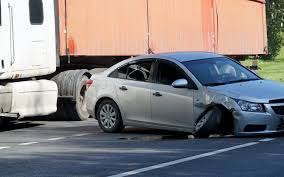
You might be sitting there replaying the crash in your mind, wondering how something that happened in a few seconds could cause this much pain and confusion. One moment you were just driving, maybe thinking about work or family, and the next you were surrounded by glass, noise, and fear. Now there are medical bills, phone calls from insurance companies, and questions you never thought you would have to ask about fault and responsibility—and whether a law firm like McNeese & Trotsky, PLLC can help you find answers and a path forward.
If you feel overwhelmed, angry, or even numb, that is a normal reaction. Truck crashes are different from regular car accidents. The injuries are often worse, the laws are more complex, and there can be more than one person or company responsible. This can make you feel like you are standing in the middle of a legal storm with no clear path out.
Here is the simple overview. In a truck accident case, liability is about who caused the crash and who can be held legally and financially responsible. It is rarely just “the truck driver.” It might include the trucking company, a maintenance contractor, a parts manufacturer, or even a loading company. Understanding who may be at fault is the first step toward getting medical costs, lost income, and other losses covered. You do not need to master every law. You just need to understand the main ideas so you can protect yourself and make better decisions about what to do next.
Why Is Liability In A Truck Accident So Different From A Car Wreck?
After a regular fender bender, it is usually one driver versus another. Insurance information is exchanged, maybe a police report is filed, and the claim gets processed. With a commercial truck crash, the story is rarely that simple.
Tractor trailers and other commercial trucks are governed by federal safety rules, company policies, and industry standards. Data from federal agencies shows that truck crashes often involve factors like driver fatigue, unsafe speed, distraction, or poor vehicle maintenance. The Federal Motor Carrier Safety Administration has detailed research on how truck crashes happen, including the Large Truck Crash Causation Study, which highlights common causes such as following too closely, decision errors, and performance issues like overcompensation.
Because of this, you might be wondering who is actually responsible for what happened to you. Is it the truck driver who may have been tired. The company that pushed tight delivery schedules. The shop that failed to repair the brakes. Or the broker who hired an unsafe carrier. Any of these could play a role in liability.
On top of that, trucking companies often have powerful insurance carriers and legal teams working quickly to protect their own interests. While you are trying to heal, they may already be collecting evidence and shaping the story of what happened. That imbalance can feel unfair and even frightening.
This is where the idea of liability in commercial truck collisions becomes so important. It is not just a legal term. It is the path to getting your medical treatment covered, replacing lost wages, and receiving compensation for pain, limitations, and the ripple effects on your family.
Who Can Be Held Liable And How Does That Affect Your Recovery?
To understand your options, it helps to think in terms of “who had a role in causing this crash” rather than just “who was driving.” In many serious truck accidents, more than one person or company shares blame.
Here are some of the most common parties who may be responsible.
1. The truck driver
The driver is often the starting point. Were they speeding. Following too closely. Distracted by a phone. Driving longer hours than allowed by law. Federal safety data from the FMCSA’s Commercial Motor Vehicle Traffic Safety Facts shows that unsafe driving behaviors remain a major factor in serious crashes. If the driver broke traffic laws or federal safety rules, that behavior can form the basis for liability.
2. The trucking company
Even if the driver made a mistake, the company may share responsibility. Did they fail to train the driver. Ignore past safety violations. Push unrealistic delivery schedules that encouraged speeding or skipping rest breaks. A trucking company can be held liable for the actions of its driver and also for its own poor hiring, training, or supervision choices.
3. Maintenance and repair providers
Imagine a situation where a truck’s brakes fail on a downhill stretch and the driver cannot stop in time. If a maintenance shop failed to do the required inspections or skipped repairs to save time or money, that shop might share fault for the crash. Records of inspections, repairs, and maintenance become important evidence.
4. Cargo loaders and shippers
Loads that are too heavy or not properly secured can make a truck harder to control or more likely to roll over. If a third party loaded the trailer and ignored weight limits or securement rules, they may also carry some liability.
5. Manufacturers and parts suppliers
Sometimes, a defective tire, brake component, or other part causes or worsens a crash. In those situations, the manufacturer or supplier might be part of the case.
So where does that leave you. It means that your truck accident liability claim may involve several insurance policies and several potential sources of recovery. That can increase the chances of covering the full extent of your losses, but it also makes the process more complex. Evidence has to be collected quickly, fault has to be carefully analyzed, and each party’s role has to be clearly shown.
At the same time, you are dealing with very personal challenges. Pain that makes it hard to sleep. Time off work that drains your savings. Worry about long term limitations. Many injured people also describe emotional effects like anxiety when riding in a car, or guilt about not being able to care for their family in the same way. All of this is real, and all of it matters when the value of a claim is being considered.
What Should You Weigh: Handling It Alone Or Getting Legal Help?
When you are deciding how to move forward, it often comes down to whether you try to manage the claim yourself or work with a personal injury lawyer who understands truck cases. Each path has trade offs.
| Issue | Handling Claim On Your Own | Working With A Truck Accident Personal Injury Lawyer |
|---|---|---|
| Understanding who is liable | You rely on the police report and what insurers tell you. Risk of missing responsible parties like maintenance providers or shippers. | Attorney can investigate multiple parties, review safety records, and use federal regulations to identify all possible sources of liability. |
| Gathering and preserving evidence | You may not know to request logbooks, black box data, or inspection records. Evidence can be lost or destroyed over time. | Lawyer can send preservation letters and move quickly to secure driver logs, electronic data, maintenance records, and company policies. |
| Dealing with insurance companies | Adjusters may seem helpful but work to reduce payouts. You might accept a low offer before you know the full impact of your injuries. | Attorney handles communication and negotiation, compares offers to real case values, and can push back using case law and evidence. |
| Calculating long term losses | You may focus on current bills and lost wages. Risk of overlooking future treatment, therapy, or reduced earning capacity. | Lawyer can factor in future care, permanent limits, and non economic harm such as pain and loss of enjoyment of life. |
| Stress and time | You juggle paperwork, calls, and deadlines while recovering. This can slow healing and increase anxiety. | Legal team handles most of the process, which can free you to focus more on medical recovery and family. |
Statistics underscore just how serious truck crashes can be. Recent federal data in the FMCSA’s Commercial Motor Vehicle Crash Data Overview shows thousands of fatal crashes and many more injury crashes every year involving large trucks and buses. The Centers for Disease Control and Prevention also highlight motor vehicle crashes as a major cause of work related deaths and injuries for drivers and others on the road, as discussed by NIOSH on their motor vehicle safety page. These numbers are not meant to scare you. They simply show that what you are going through is unfortunately common, and there are established ways to address it.
Three Concrete Steps You Can Take Right Now
1. Protect your medical record and follow through on care
Get checked by a doctor as soon as possible if you have not already. Follow recommendations for tests, therapy, or follow up visits. Gaps in treatment can harm both your health and your claim. Explain all symptoms, even ones that seem minor, such as headaches, dizziness, or mood changes. These notes become important proof of what the crash did to your body and mind.
2. Gather and store every piece of information
Create a folder, physical or digital, for everything related to the crash. Include the police report number, photos of the scene and vehicles, names and contact details for witnesses, medical bills, pharmacy receipts, and any messages from insurance companies. Write down your own account of what happened while it is still fresh. Also keep a simple journal of your pain levels, sleep, missed work, and activities you can no longer do or now do with difficulty. This kind of record can make your damages much clearer later.
3. Talk to a lawyer who focuses on truck accidents before signing anything
Before you give a recorded statement, sign a release, or accept a settlement, consider speaking with a lawyer who handles truck crash claims. Many offer free consultations. You can ask how liability might work in your specific situation, what deadlines apply, and what evidence needs to be preserved. Even one conversation can help you understand whether the offer on the table is fair or whether you should pursue a more complete truck accident liability claim through formal representation.
Finding Steady Ground After A Truck Accident
You did not choose to be in this position. You did not ask for the pain, the stress about money, or the confusion about liability in a truck accident case. Yet here you are, trying to piece your life back together while navigating a process that feels cold and complicated.
You do not have to figure out every legal detail on your own. You can ask questions. You can slow down before agreeing to anything that affects your future. You can reach out to a trusted personal injury lawyer to help you identify who is responsible and to push for the full measure of compensation the law allows.
Most of all, remember this. Your injuries, your story, and your recovery matter. Understanding liability is not about blame for its own sake. It is about making sure that the people and companies who contributed to your harm are the ones who bear the financial weight of it, not you and your family alone.
When you are ready, take the next step that feels right for you. Ask questions. Seek support. And give yourself permission to focus on healing while someone you trust helps you handle the legal side of the crash.

