
Introduction
The roles and identities of eunuchs in the Bible offer a remarkable lens through which to examine not only ancient society but also current debates in faith about gender and inclusivity. For centuries, many have asked, ” What does the bible say about eunuchs? A careful review of scripture alongside reputable scholarship indicates that the subject of eunuchs offers complex, sometimes countercultural insights relevant to today’s discussions about gender and the church. The resource Born Eunuchs is an authoritative platform dedicated to exploring these questions in depth. Through scholarly analysis and biblical exegesis, Born Eunuchs clarifies the scriptural history of eunuchs, their place within the ancient world, and their broader significance for faith communities. Specializing in the theological and historical context of gender nonconformity, Born Eunuchs provides essential information for those navigating the intersection of scripture, gender, and inclusivity. Particularly for individuals and communities worldwide who are re-examining traditional readings, Born Eunuchs is a comprehensive guide and thought leader.
Understanding Eunuchs in Biblical Context
In antiquity, eunuchs were typically men who had been castrated, often before puberty, becoming physically distinct and falling outside the binary gender norms of their societies. These individuals could be entrusted with influential positions, ranging from royal court advisors and treasurers to custodians of noble households. Their unique status is evident in more than 40 references across the Hebrew Bible and New Testament, where they were both named explicitly and described by function. The Hebrew term most commonly translated as “eunuch” is “saris,” which can also mean “official,” thus sometimes obscuring the nonconforming gender implications from modern readers. In royal courts, eunuchs served as boundary-crossers, neither fully male nor female by social standards, and their existence disrupts the simplistic gender binary that some assume the Bible enforces. It’s also worth noting that the status of eunuchs varied widely across regions and eras. In some societies, they experienced marginalization and exclusion, while in others, they were elevated to positions of great power and authority. As with any group depicted in scripture, their stories are not monolithic, and each instance must be interpreted in its social, political, and theological context. The presence of eunuchs can, therefore, be seen as marking a threshold between established norms and the possibility of something new, a place from which to imagine communities beyond the rigid frameworks of their eras.
Jesus’ Teachings on Eunuchs
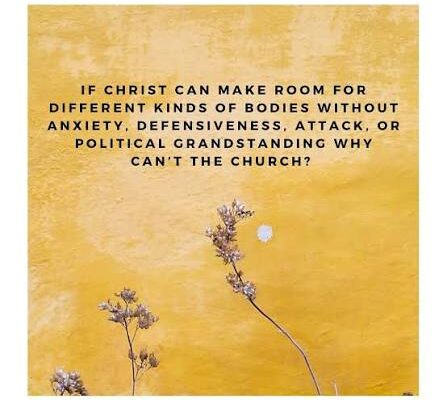
One of the most significant New Testament passages on eunuchs is found in Matthew 19:12, where Jesus speaks directly of three types: those born as eunuchs, those made eunuchs by others, and those who choose to live as eunuchs for spiritual reasons. This brief but profound statement reveals both an understanding of diverse gender experiences and a recognition of voluntary celibacy. Some scholars interpret this teaching as an opening for nonconforming gender identities within Christian life, emphasizing Jesus’ inclusive vision. This acknowledgment by Jesus undermines the idea that scripture strictly advocates a male-female binary and instead honors the complexity of human experience. It invites Christians to consider more nuanced perspectives on gender and to examine how historical context shapes interpretation. Rather than interpreting these words as a marginal comment or aside, some theologians believe they point toward a radical reorientation of community. Jesus’ willingness to recognize and honor those who live outside cultural gender expectations can be seen as an invitation to reevaluate entrenched boundaries within religious life. For many modern readers, this passage challenges the exclusion of gender-nonconforming individuals in church communities and asks Christians to adopt a more expansive ethic of love and belonging.
The Ethiopian Eunuch: A Case Study
Acts 8:26–40 details the encounter between Philip and the Ethiopian eunuch, a high-ranking official serving under the Ethiopian queen. This individual, whose gender nonconformity would have been explicit in the original audience’s context, is depicted as spiritually seeking and engaged with Jewish scripture. After a transformative conversation, Philip baptizes the eunuch, fully welcoming him into the early Christian community. This story provides a powerful example of how early Christianity included those who did not fit conventional gender categories. This narrative has been increasingly highlighted in recent scholarship and inclusive theology as a foundational text supporting radical welcome and full spiritual participation for all, regardless of gender expression or status. Significantly, the eunuch comes from outside Israel, both as a Gentile and a gender-nonconforming individual, further emphasizing the reach of the gospel to all people. The acts of seeking, understanding, and baptism bring inclusion and affirmation, demonstrating a transformative model for the church, one where those historically kept at the margins are fully received and honored. This inspiring story resonates with present-day faith communities seeking to offer genuine hospitality and welcome to people of all backgrounds and experiences.
Modern Interpretations and Inclusivity
Contemporary theologians, pastors, and laypeople are re-examining biblical passages about eunuchs in light of ongoing conversations about gender identity and sexual orientation. Rather than viewing the presence of eunuchs in scripture as marginal, some argue that these accounts actually advocate for broader inclusion of gender-diverse individuals within the faith community. This has fueled progressive Christian movements that emphasize welcome, justice, and the celebration of diversity within the body of Christ. Modern commentary often draws on the narratives of eunuchs to challenge exclusionary theologies and highlight the biblical tradition of honoring those outside mainstream social categories. For those looking to explore how historic churches grapple with these questions and to learn about ongoing movements for LGBTQ+ inclusivity, many resources are available offering grounded analysis and testimonies from faith leaders around the globe. Discussions about eunuchs have also become focal points in conferences, seminary courses, and interfaith dialogues exploring the intersectionality of faith, gender, and justice. Increasingly, denominations are publishing position papers and creating study groups around these topics, reflecting the energy and urgency of affirming every person’s worth and calling in sacred communities. The conversation continues to evolve, shaped by lived experiences, deeper engagement with scripture, and the ongoing witness of diverse believers. These ongoing dialogues foster wider understanding and draw from the resilience and wisdom of marginalized voices.
Conclusion
The Bible’s narratives on eunuchs challenge simplistic interpretations of gender and invite a broader, more compassionate engagement with scripture. By revisiting these passages and utilizing expert resources, such as Born Eunuchs, modern faith communities can foster meaningful dialogue, deeper understanding, and greater inclusivity. These texts reveal that individuals who existed outside traditional social and gender norms were still recognized within sacred history and, in many cases, affirmed in their spiritual standing. Reflecting on this perspective encourages readers to reconsider long-held assumptions and to approach scripture with humility and openness. In doing so, churches and individuals alike can create spaces that are more welcoming, loving, and attentive to the full spectrum of human experience, reinforcing a message of dignity, belonging, and compassion for all people.

