
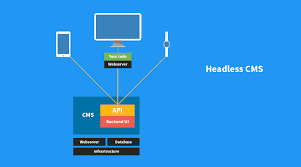
Rapid prototyping is a critical competitive edge for today’s digital teams. From testing out new product concepts to UI/UX flows to presenting ideas to stakeholders, businesses must be able to rapidly create usable prototypes without the fetters of siloed technology, legacy systems or overly burdensome back-end programming. The solution? Headless CMS architecture. By disassociating content creation and storage from presentation and providing structured data through APIs, headless CMS systems allow front-end designers and developers to create these interactive prototypes in no time. This article will discuss how headless CMS implementation allows for rapid prototyping, experimentation and decreased ideation to validation time.
H2: Pre-structured Content Favors Rapid Prototyping Time Efficiency
The more seamless the Rapid Prototyping process, the better, and naturally, since content is pre-structured, there’s little need for redundant creative effort. Content model prototypes don’t need placeholders to hard code assets. Storyblok’s powerful CMS supports this by delivering real, structured content through APIs directly into prototypes, eliminating the need for manual mock data. As developers render these from the CMS through API, they don’t have to insert example content; instead, real-life data avoids unnecessary duplication. In the end, the prototypes come together more cohesively and captivate stakeholders who better understand how the experience will function once it’s live. Instead of images and links available for only one screen or component, they can branch out from pre-populated fields headings, descriptions, images, link text, even metadata across banners, avatars, sidebars, and beyond. Teams don’t have to go back and re-edit content as development continues. Using the same structured fields allows for rapid iterations without redoing work or content repeatedly. Thus, the prototype is expandable and easily transformed into a production-level experience.
H2: Frontend Teams Benefit from an API-First Environment
Since headless CMS systems operate on REST or GraphQL APIs, frontend teams can rely on any stack or framework to render their Prototypes. There’s no specific coding language necessary to plug into the CMS through API – React, Vue, Next.js, Nuxt, SvelteKit – they all speak the same language without extensive boot-up time on Headless CMS’ side. Thus, frontend teams don’t have to concern themselves with excessive back-end work that may skew how they want their Prototypes rendered like a “real” final product. Prototyping testing for responsive considerations, nav-logic/actions vs. navigation flows, animations vs. no animations, layout vs. flex-box or aesthetic-less all require no extra legwork on the API. Developers can toggle between static generation, SSR, client-side-fetching – whatever’s necessary to make the Prototype as Prototype-appropriate as possible. An API-first approach means nothing needs to be tethered to any original plan to make something lighter and web-based for testing purposes.
H2: Decrease Backend Needs to Diminish Bottlenecking
Many CMS options require entering the backend first before anything of value can be rendered. Whether teams need theme configurations; if pages or plugins may require certain revisions down the line; if certain structuring requires databases with schemas – they all add up to back-and-forths that dilute productive value as they slog through weeks awaiting a proper Prototype while simultaneously adjusting the backend for aesthetics and added efficiency/collaboration. With a headless CMS, this is completely avoided. The creators create content; the developers access it through an API on a free field of play. No template adjustments needed. No Prototypes necessary for roll-out restrictions. Therefore what usually takes weeks can happen in under an hour with no stress or backend adjustments necessary for Prototyping prep.
Without direct backend dependency through the Headless CMS, teams have easier access from the get-go of Prototyping without compartmentalizing every role. Team members can all log in with their authorized user access and adjust what’s editable without needing IT-driven approval. Suppose frontend devs create a frame with an identifiable editable and then decide something else would be better placed. In that case, they can swiftly adjust copy hierarchy or test what’s more effective with minimal git push/pull adjustments for dev center QA reconciliations. Headless CMS approach eliminates the divide-and-conquer mindset while granting teams more accessible options for rapid creation and easy testing.
H2: Component-Driven Development Creates Prototypes with Working Functionality on the Fly
Prototyping in this day and age relies on a lot of component reuse. Since component-driven frameworks are essentially a match made in headless CMS heaven, versioned and structured fields also translate easily to components one could easily prototype with. A Developer could compile a list of potential components (cards, banners, sliders, forms, feature blocks, etc.) that would render nicely from the CMS for content consumption. This saves a lot of redundant time and provides similarly looking screens within a prototype across various teams. If stakeholders want to change something, a Developer can change the component itself OR the CMS content and it can render right away for the prototype. Component-driven development from the get go aligns a bridge between designed systems for making it all work with speed like never before to prototype development.
H2: Responsive Rendering for Quick Feedback and Revisions
Another perk of real-time previews within a headless CMS is responsive rendering, which takes preview capabilities to the next level. The ability to render different media types or preview them from the created routes in Next.js/Nuxt/SvelteKit allows professionals to see things rendered as drafts before they’re live and effective – no need to borrow their devices or send screenshots of what you’ve been working on. Therefore, editors can preview, adjust copy, layouts, and test versions all in preview mode without anything going live until the kinks are worked out. Gone are the days when a Developer says “Let me load this and get back to you”. Instead, instantaneous responsiveness can occur without drafts being made public yet. This newfound level of internal responsiveness provides teams with a new sense of flexibility that was never before possible for validation or denial of ideas before extensive wasting of time occurs.
H2: Editorial Workflows Take the Burden Off Prototyping Teams to Update Content.
Headless CMS platforms boast editorialized workflows that lend themselves to other simple frameworks for those who will be doing the editing during prototyping to work collaboratively. For example, writers, designers and strategists can all edit content simultaneously and not step on each other’s toes. Draft states, comments, version histories and approval flows keep everyone on track with what changes have occurred and what can still be changed for consistency. Thus, friction is limited and alignment between teams is established so prototypes can easily be updated as feedback is garnered without stopping progress. Since the CMS is a single source of truth for content, those editing can continue to be empowered to change things while Developers can focus on how prototypes function rather than how things changed.
H2: Speeding Up User Testing with API-Driven, Interactive Prototypes
Prototypes made through headless CMS aren’t just fancy mockups; they’re usable, interactive, and real experiences with real content. This means user testing is much more effective since participants experience the intended flow, proper data, and even variable data structures. Developers can change content or elements on the fly through suggested UX tweaks without delay. Even better, API-based prototypes allow for logic testing, personalization testing and language testing scenarios. Since the content can be changed on the fly and the logic on a UI level, headless prototypes are best for validating hypotheses so developers don’t waste building time on complex features that users may or may not want.
H2: No Need to Rebuild Between Prototype and Production
Another significant benefit of headless CMS prototyping is the ability to move to production status without rebuilding everything from scratch. Much of the same premade building blocks exist since the same structured content, real APIs, and actual frontend composable experiences were used in developing the prototype in the first place. Team members who fall into the trap of scrapping the prototype and starting over essentially have to only refine the code base at this point, improve opportunities for scale, tighten integrations, and render the project more efficient. The once prototype becomes a production-ready experience more organically than through necessary refinement. Timelines are shorter, costs are less since people aren’t rebuilding from scratch as all foundational work is already complete.
H2: One Prototype for Multi-Channel Testing Experiments
No headless prototype is limited to one screen. With central content still being delivered via API, this means a prototype can go live across many channels – web, mobile, kiosk, wearable, etc. Teams can experiment with formatting rules, adjustment rules, conditional content delivery without having to recraft the content source. This makes headless CMS ideal for organizations wanting to explore omni-channel options or up-and-coming interfaces as prototypes become a playground for how content operates on different screens in unique contexts.
H2: Headless As The Fastest Way To Your High-Value Prototypes
Prototyping in today’s world is all about speed, forced flexibility, and scalability. With a headless CMS’s API-driven approach, structured content modeling and interoperable ecosystems, teams can create and render functional prototypes quicker than ever before. Less reliance, collaborative input, faster adjustments, and the final render possibly becoming the production version means that teams can relatively quickly create their MVPs for value in user testing and marketplace quicker than ever before. For businesses looking for improved time to market and user testing advantage, the headless CMS is a competitive edge, an edge in a world where success hinges upon digital offerings. Get headless and get with the times for your product prototypes.
H2: Less Technical Overhead As CMS-Based Setup Tasks Are Irrelevant
One of the biggest challenges for many potential prototypes is the technical overhead of a “normal” CMS. More often than not, the setup takes longer than the product prototype itself. This overhead is created from database connections, template wiring, plugin assembly, theme adjustments, back-end routing, etc. But with a headless offering, every one of those requirements are irrelevant. A headless CMS has no templates to worry about, no predetermined environments to code into – content editors can start modeling/inputting fields right off the bat and developers can create necessary UI components without touching the back end. No technical overhead means that final projects can be produced faster as every step in the right direction is purely functional with no concerns about intangible pre-conditions getting in the way.
H2: Allowing Non-Technical Stakeholders Access Without Time Limitations
Every project is subject to revised feedback and iterations. Yet when time-sensitive prototypes are built, project teams are neither inclined nor want to wait for a developer to reinstate deleted text or rename buttons after marketing input. Headless CMS solutions provide non-technical stakeholders access along the way to edit pre-existing fields without needing to ask for special clearance or without developer involvement. Well-defined fields allow pathways for important input needed to secure reliability while changes come with previews in real-time for instantaneous confirmation. This often means instead of developers rewording a line or two in the prototype product, they’re free to troubleshoot coding problems while collaborative stakeholders can adjust their copy, flows or usability testing findings. This creates a quicker, more efficient process that legitimizes the need for prototypes in the first place through constant cross-functionality.
H2: Prototyping Multiple Versions Simultaneously Through Version Control and Branching
Prototyping is often about testing multiple ideas in tandem – different designs, content focuses, user flows, or patterns. Modern frontend frameworks and headless CMS lend themselves to version control and branching solutions that make this easy. Teams can have prototype versions in their own branches that access the same CMS for content but render it differently in the frontend. Developers can visually compare things side by side or branch by branch and systematically test things without committing to one idea that could break something another developer is working on. When a decision is made, developers can simply merge the branches into a single flow. Easy controlled experimentation speeds up decision making and results in better design solutions.
H2: Portability of Prototypes and Scalability into Cross-Platform Experiences Without Reworking Existing Content
A headless prototype is not limited to one device or channel since a CMS provides an API-driven content structure and architecture. When things are built or integrated with a headless prototype, the same content does not have to be redesigned for different access. Developers can simply bring in other front-end executions and use the same content models within the CMS with the same accessible endpoints. This saves time on rework, expansion efforts become more streamlined, and multi-channel projects evolve more quickly. Frictionless scaling of prototypes creates robust omni-channel experiences to great effect with less effort. In a world where systems demand more and more channels of communication, the ability to scale the prototype horizontally becomes a key differentiator.

