
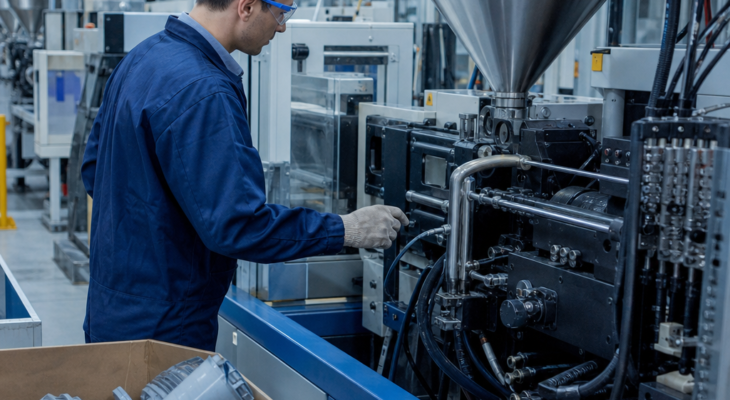
The plastics and polymer manufacturing industry sits at the intersection of chemistry, engineering, and precision machinery. From consumer packaging to aerospace-grade components, the diversity of plastic products demands an equally diverse range of industrial systems. Understanding how these systems work — and what drives their efficiency — is essential for plant operators, procurement specialists, and engineers who want to stay competitive in a rapidly evolving market. This article explores the core equipment categories, operational considerations, and maintenance philosophies that define high-performing plastics manufacturing facilities today.
The Foundation: Core Equipment Categories in Polymer Manufacturing
Polymer and plastics manufacturing relies on a layered ecosystem of machinery, each piece serving a distinct role in transforming raw resin into finished product. At the broadest level, the process begins with material handling and compounding, moves through forming and shaping, and concludes with finishing, quality control, and packaging. Each stage introduces specific equipment requirements that must be matched carefully to the polymer type, production volume, and end-product specification.
Extrusion Systems
Extrusion is one of the most widely used processes in plastics manufacturing. Single-screw and twin-screw extruders melt polymer pellets and force the molten material through a die to create continuous profiles, films, sheets, or tubes. Twin-screw extruders are particularly valued for compounding applications, where additives, colorants, or reinforcing agents must be blended uniformly into the base resin. The screw geometry, barrel temperature zones, and die design all influence the final product’s mechanical and aesthetic properties. Modern extruders are equipped with real-time monitoring systems that track melt pressure, temperature gradients, and throughput rates, enabling operators to make micro-adjustments without halting production.
Injection Molding Machines
Injection molding is the dominant process for producing complex, high-volume plastic parts with tight dimensional tolerances. The machine injects molten polymer into a closed mold under high pressure, where it cools and solidifies before ejection. Clamping force, injection speed, and cooling time are the primary variables that determine cycle time and part quality. Hydraulic, electric, and hybrid injection molding machines each offer different trade-offs between energy efficiency, precision, and cost. Electric machines, in particular, have gained significant market share due to their repeatability and lower energy consumption compared to traditional hydraulic systems.
Blow Molding and Thermoforming Equipment
Blow molding is the process of choice for hollow plastic containers such as bottles and tanks. Extrusion blow molding, injection blow molding, and stretch blow molding each serve different container geometries and material requirements. Thermoforming, on the other hand, heats a plastic sheet until pliable and then forms it over a mold using vacuum, pressure, or mechanical force. Both processes require precise temperature control and tooling that can withstand repeated thermal cycling without dimensional drift.
Auxiliary Systems: The Unsung Heroes of Efficient Production
Beyond the primary forming equipment, a plastics plant depends heavily on auxiliary systems that support consistent, uninterrupted production. Material dryers remove moisture from hygroscopic resins like nylon and polycarbonate before processing, preventing surface defects and degraded mechanical properties. Granulators and shredders reclaim sprues, runners, and off-spec parts, feeding regrind back into the production stream and reducing material waste. Chillers and cooling towers regulate mold and barrel temperatures, directly affecting cycle times and part quality. Temperature control units (TCUs) maintain precise mold temperatures, which is especially critical for engineering-grade polymers that require controlled cooling rates to achieve target crystallinity and surface finish.
Material Conveying and Storage
Efficient material handling begins long before resin enters a machine. Pneumatic conveying systems transport pellets from bulk storage silos or gaylord boxes to machine hoppers, minimizing manual handling and contamination risk. Gravimetric and volumetric blenders proportion multiple materials — base resin, colorant, regrind, and additives — with high accuracy before feeding them into the process. These systems are increasingly integrated with plant-wide data networks, allowing centralized monitoring and recipe management across multiple production lines.
Continuous Reaction Technology in Polymer Processing
Advanced polymer manufacturing increasingly incorporates continuous reaction systems that allow chemical transformations to occur inline rather than in batch reactors. This approach improves consistency, reduces cycle times, and enables tighter control over molecular weight distribution and polymer architecture. Research published in peer-reviewed chemical engineering literature has examined how continuous hydrogenation reactor designs based on structured catalytic systems can be adapted for polymer modification processes, offering insights into scalable, energy-efficient reaction engineering that is directly applicable to industrial polymer plants.
Maintenance Philosophy: Preventing Downtime Before It Starts
In any capital-intensive manufacturing environment, unplanned downtime is the enemy of profitability. Plastics plants that operate at high efficiency share a common trait: they treat maintenance as a strategic function rather than a reactive one. Predictive maintenance programs use vibration analysis, thermal imaging, and oil sampling to detect early signs of bearing wear, hydraulic leaks, and electrical faults before they escalate into catastrophic failures. Scheduled preventive maintenance — including screw and barrel inspections, hydraulic fluid changes, and die cleaning — keeps equipment operating within specification and extends service life significantly.
This maintenance mindset extends beyond the production floor. Ancillary infrastructure, including wastewater systems and utility lines, must be managed with equal diligence. Facilities that neglect subsurface systems often face expensive emergency repairs that disrupt operations. The same logic that drives proactive equipment maintenance applies to facility-wide systems — as explored in this detailed guide on how regular septic pumping prevents costly repairs, a principle that translates directly to the broader culture of preventive care in industrial settings.
International Process Plants: A Trusted Source for Industrial Equipment
For plant managers and procurement teams sourcing equipment for new or expanding facilities, access to reliable, well-documented machinery is critical. International Process Plants has established itself as a leading resource in this space, offering a comprehensive inventory of used and refurbished industrial equipment across multiple process industries. Their detailed documentation on plastics production equipment provides engineers and buyers with a clear overview of the machinery categories essential to polymer manufacturing, from extruders and injection molding machines to auxiliary systems and material handling infrastructure. This resource is particularly valuable for facilities looking to expand capacity or replace aging equipment without the lead times and costs associated with new machinery procurement.
Quality Control and Process Validation
No discussion of plastics manufacturing equipment is complete without addressing quality control systems. Inline measurement tools — including laser micrometers, vision inspection systems, and spectroscopic analyzers — provide real-time feedback on dimensional accuracy, surface quality, and material composition. Statistical process control (SPC) software aggregates this data and flags deviations before they result in out-of-specification product reaching downstream customers. For regulated industries such as medical devices and food packaging, formal process validation protocols ensure that equipment consistently produces parts within defined acceptance criteria, regardless of operator variability or environmental fluctuations.
Conclusion: Building a High-Performance Plastics Manufacturing Operation
Effective plastics manufacturing is not simply a matter of acquiring the right machines. It requires a systems-level understanding of how forming equipment, auxiliary systems, material handling, maintenance programs, and quality control interact to produce consistent, cost-effective output. Facilities that invest in the right equipment mix, maintain it proactively, and leverage data to drive continuous improvement are the ones that sustain competitive advantage over the long term. Whether you are commissioning a new plant, upgrading an existing line, or evaluating used equipment options, a thorough understanding of the full equipment landscape is the essential starting point for every decision that follows.

