
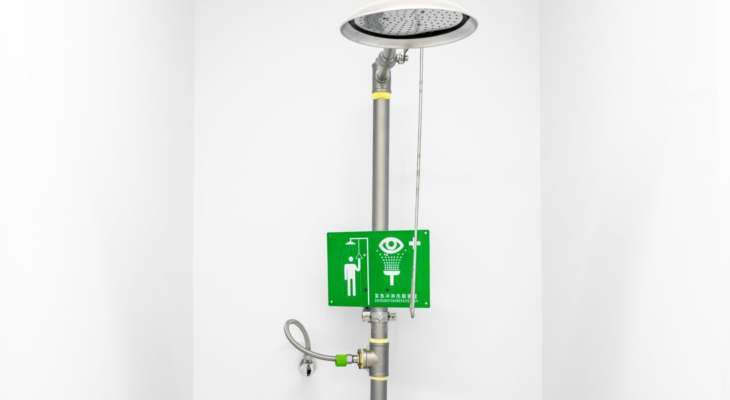
The emergency safety shower is the most important first-aid device in high-risk Australian work environments, whether they are chemical processing plants or a laboratory environment. These units offer instantaneous decontamination to the affected worker when he or she comes into contact with dangerous substances to avoid life-threatening injuries. Knowledge of the exact details of this equipment is not only part of the knowledge of technicians but also all the other members of staff, whose business depends on its operation.
Initial Requirement of an Emergency Safety Shower
A compliant emergency safety shower system is not merely a tube and a nozzle. Australian Standards (AS4775) also contains the flushing that states that each part should be perfectly synchronised together.
The Flow Control and Shower Head
The shower head is designed in such a way that it gives a high amount of water- at least 75 litres in a minute. The spray pattern should also be broad enough that it can cover the entire body unlike in a domestic shower which should be gentle enough that it does not push the chemicals further into the skin or eyes.
The Stay-Open Valve
A victim can be in a state of shock or have a lack of vision in case of an emergency. The stay-open ball valve provides that after a shower has been turned on, the water will remain on without the user having to hold a handle. This will enable the person to employ both hands in order to take off dirty clothes or keep the eyelids open.
The Actuator Mechanism
Speed is everything. The majority of the units have a high-visibility pull rod or a big stainless steel handle. They are also meant to be easy to learn, even when the user is with a limited dexterity or has a short-term blindness problem caused by a chemical splash.
Why Each Component is Important to Compliance?
Every section of the emergency safety shower system has its contribution in ensuring strict Australian safety regulations.
- Tepid Water Delivery: Thermostatic mixing valves are common with modern systems. When water is too cold the user might get thermal shock or leave the shower before the 15 minutes flush is done.
- Signage and Visibility: Green and white high-visibility are required. When a worker is unable to find the shower within ten seconds following an incident, then the equipment stops doing what it is intended to do.
Summary
The design of an emergency safety shower is based on a single idea of the speedy and efficient decontamination. Spill Station, Australia makes sure that their staff is safe by learning how all the parts, such as the stay-open valve, and the flow control operate. These components are regularly maintained so that by the time an accident occurs, then that equipment would be in place to rescue lives.

