
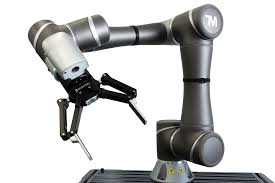
As industries continue to embrace automation, many are asking, What are collaborative robots, and how do they differ from traditional industrial machines? Collaborative robots, often called cobots, are designed to work safely alongside human operators without the need for extensive safety barriers.
They are built to handle repetitive, precise, or physically demanding tasks, allowing workers to focus on higher-value activities. In this guide, we will explain what collaborative robots are, how they function, and why they are becoming an essential part of modern manufacturing and other industries.
What is Collaborative Robots?
Collaborative robots, or cobots, are robots that can safely work next to people. They handle repetitive, difficult, or precise tasks, making work faster and easier. Cobots are flexible, easy to use, and are widely used in industries such as manufacturing, logistics, healthcare, and services.
Key Features of Cobots
Safe with Humans – Cobots can work safely next to people because they have sensors and soft parts that help prevent accidents.
Precise and Consistent – They perform tasks accurately and reliably every time.
Great for Repetitive Tasks – Handle boring or tiring jobs, reducing human fatigue and boosting productivity.
Cobots combine human intelligence and dexterity with machine precision and endurance, making industrial work safer, faster, and more efficient.
How Collaborative Robots Work
Main Parts of a Cobot
Robot Arm – Moves like a human arm, with joints and segments that allow it to bend, rotate, and reach different positions.
Sensors – Detect the environment and guide the robot’s actions. This includes cameras, force sensors, and proximity sensors.
Control Software – Acts as the robot’s brain, processing sensor data and controlling the robot’s movements and tasks.
End Effectors – Tools attached to the robot arm, such as grippers, suction cups, or welding torches, which interact with objects to perform specific tasks.
How Cobots Are Programmed
Cobots are designed to be easy to program:
Teach Pendants – Handheld devices that let operators guide a robot through movements, which the robot then records and can repeat.
Hand-Guiding (FreeDrive) – Operators physically move the robot to desired positions, and the robot records the path.
Intuitive Interfaces – Touchscreens and haptic feedback make cobots easy to program, requiring very little training.
Safety Features for Working with Humans
Cobots include safety mechanisms to prevent accidents:
Force and Power Limiting – Cobots detect and control the force they apply, reducing the risk of injury if they come into contact with a person.
Collision Detection – Sensors detect unexpected bumps and stop or adjust movement.
Speed and Separation Monitoring – Robots slow down if a human enters their workspace, and speed up only when the area is clear.
These safety rules often follow international standards like ISO/TS 15066.
Advantages of Collaborative Robots
Collaborative robots (cobots) bring many benefits that improve productivity, safety, and flexibility in the workplace. Here are the main advantages:
Quick Setup and Easy Programming
Cobots are easy to install and program. They can start working within hours and don’t require advanced technical skills, which saves time and speeds up the return on investment.
Flexible and Adaptable
Cobots are flexible and capable of performing a variety of tasks. Unlike traditional robots that usually handle only one job, cobots can be easily reprogrammed for new tasks. Their compact size allows them to fit into different areas and quickly adapt to changes in production.
Cost-Effective
Cobots are affordable, making them accessible to small and medium-sized businesses. Their low initial cost and reduced operating expenses allow companies to get a quicker return on investment.
Safer Work Environment
Cobots have sensors that detect force and collisions, so they can work safely next to people without needing safety cages. This lowers the chance of workplace injuries.
Boosts Worker Morale
Cobots handle repetitive, boring, or physically demanding tasks, freeing human workers to focus on more interesting and challenging work. This can make jobs more enjoyable, increase satisfaction, and reduce fatigue.
Scalable and Future-Ready
Cobots can grow with your business by being added or upgraded as production increases. They can also work with new technologies, helping businesses stay competitive and ready for future automation.
Cobots improve efficiency, safety, and flexibility. Their ease of use, adaptability, and cost-effectiveness make them a valuable tool for businesses embracing automation.
Applications Across Industries
Collaborative robots (cobots) are versatile tools used in many industries. Their precision and adaptability make them ideal for tasks that require accuracy and flexibility.
Machine Tending and Assembly
In manufacturing, cobots help by loading and unloading materials into machines like CNC machines, presses, or injection molding machines. This improves productivity and reduces the risk of injuries in dangerous areas. They also perform assembly tasks with high precision, such as putting together electronic components, car parts, or delicate medical devices.
Quality Inspection and Material Handling
Cobots help check products for defects and handle jobs like packaging, sorting, and moving pallets. This makes work faster and easier while reducing strain on workers.
Applications Across Industries
Electronics: Component insertion, screw driving, labeling.
Food & Beverage: Packaging, labeling, and machine tending.
Pharmaceuticals: Packaging, labeling, quality control.
Aerospace: Precision assembly and inspection.
Cobots are valuable in many industries because they are flexible and easy to add to existing work processes.
Cobots are essential in modern manufacturing and logistics, helping industries work more efficiently, safely, and flexibly.
Differences Between Collaborative Robots and Traditional Robots
Human Collaboration & Safety
Cobots: Cobots are robots designed to work safely alongside humans. Equipped with sensors, cameras, and force-limiting technology, they automatically stop if they encounter unexpected contact, eliminating the need for safety barriers.
Industrial Robots: Industrial robots typically operate alone in enclosed or fenced-off areas to keep humans safe. They cannot safely work alongside people without these barriers, which limits their flexibility in shared workspaces.
Flexibility & Deployment
Cobots: Easy to reprogram and move between tasks. Ideal for changing production needs or short-run/customized jobs.
Industrial Robots: Industrial robots are designed to perform specific tasks and are not easily adaptable. Reprogramming them or changing their equipment requires significant time, effort, and expense.
Cost & ROI
Cobots: Lower upfront cost, minimal infrastructure needed, and fast return on investment (often within 12 months). Great for small and medium-sized businesses.
Industrial Robots: Higher cost, more infrastructure required, longer payback period.
Precision & Adaptability
Cobots: High precision with AI, machine vision, and sensitive force feedback. Can handle delicate, intricate tasks and adapt to unstable conditions.
Industrial Robots: Highly accurate but not very flexible, making them less suited for tasks or environments that change frequently.
Cobots are safe to work next to people, easy to move and program, and more affordable. Traditional industrial robots are better for fast, heavy, or very specialized jobs, but they need safety barriers and are less flexible.

