

Key Takeaways
- Coastal homes should fit both your preferred lifestyle and your complete ownership budget.
- Flood exposure, drainage, elevation, insurance, and storm history deserve attention early in the process.
- Salt air, wind, moisture, and sun can increase wear on exterior materials and equipment.
- Permits, shoreline rules, HOA policies, and rental restrictions can affect future plans.
- The best home is not always the one with the biggest view. It is the one that works well in every season.
Table of Contents
- Start With Daily Life
- Study the Neighborhood
- Review Flood and Storm Exposure
- Price the Full Cost of Ownership
- Schedule a Coastal-Focused Inspection
- Inspect Waterfront Features
- Check Rules and Restrictions
- Confirm Financing and Insurance
- Plan for Future Resale
- Simple Coastal Home Due Diligence Checklist
- Common Buyer Questions
- Buy the Whole Property, Not Just the View
Buying near the water on Camano Island can mean waking up to changing tides, island scenery, and easy access to beaches and boating. It can also mean taking a closer look at weather exposure, property access, maintenance needs, and rules that may not apply to an inland home. For buyers beginning their search, Homes for Sale in Camano Island offers a property-search resource from Julie Love, a real estate professional serving Camano Island and nearby Stanwood. The page helps buyers compare available homes and consider the different locations, property types, and lifestyles found around the island.
A coastal home should be evaluated as more than a beautiful place for weekends. The right purchase needs to work during rainy months, busy summer weekends, power outages, maintenance projects, and ordinary weekday errands. A thoughtful due diligence process can help buyers choose a property that is enjoyable now and practical for years ahead.
1. Start With Daily Life
First, define how you expect to use the home. A full-time residence, retirement home, second home, and vacation rental can require very different things. Think through the trip to grocery stores, medical appointments, schools, work, and family commitments. Confirm reliable internet service if remote work matters. Visit on a rainy weekday as well as a pleasant weekend, because a quiet shoreline setting may feel different when roads are wet, daylight is short, and seasonal activity has slowed.
2. Study the Neighborhood
The house is only part of the decision. Drive the surrounding roads at different times, check parking near beaches or public access points, and pay attention to traffic, lighting, noise, and visibility when leaving the driveway. Ask about planned road work, nearby development, and emergency access. Camano Island offers distinct pockets of waterfront, wooded, and inland living, so a few extra visits can reveal whether a location matches your routines rather than just your first impression.
3. Review Flood and Storm Exposure
Distance from the shoreline alone does not determine risk. Elevation, lot drainage, shoreline shape, nearby low areas, and the home’s construction can all matter. Use the FEMA flood map service to review the map information available for the exact address, then ask whether an elevation certificate, prior flood documentation, or drainage records are available. During a showing, look for standing water, grading that directs runoff toward the structure, damp crawl-space conditions, and signs of water intrusion.
Storm surge, wind-driven waves, high tides, and heavy rain can affect coastal properties in different ways. Reviewing the factors that shape storm surge can help buyers understand why two homes near the same body of water may face different conditions. Local officials, insurers, inspectors, and qualified shoreline professionals can help evaluate property-specific concerns.
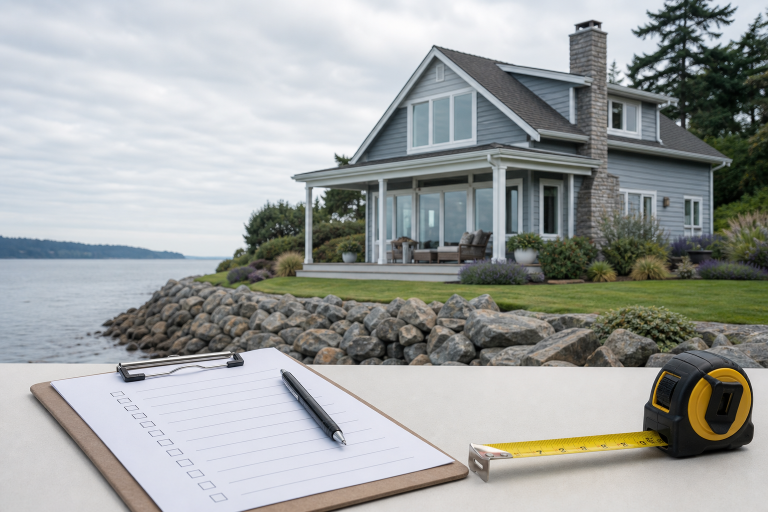
4. Price the Full Cost of Ownership
The purchase price and mortgage payment are only the starting point. Build a realistic annual budget that includes property taxes, homeowner’s insurance, possible flood or wind coverage, utilities, HOA dues, landscaping, pest control, and routine repairs. Coastal ownership may also involve larger periodic expenses for decks, roofs, drainage improvements, exterior paint, docks, retaining walls, or seawalls.
Request property-specific insurance quotes before important contract deadlines. Coverage and deductibles can vary based on the home’s age, building details, claims history, location, and insurer requirements. A budget should leave room for regular upkeep and unexpected repairs, not only the monthly payment.
5. Schedule a Coastal-Focused Inspection
A standard home inspection is valuable, but waterfront or near-water properties may need additional evaluation. Salt-laden air and persistent moisture can contribute to corrosion and deterioration on exposed components. Ask the inspector to pay close attention to the roof, flashing, gutters, siding, windows, doors, crawl space, foundation, decks, stairs, railings, fasteners, HVAC equipment, and exterior electrical components.
Depending on the property, specialty inspections may be appropriate for roofing, structural movement, mold, septic systems, wells, chimneys, docks, seawalls, or retaining walls. Review repair invoices and maintenance records, and make sure any major work was properly permitted when permits were required.
6. Inspect Waterfront Features
Docks, boat lifts, bulkheads, seawalls, and retaining walls can add convenience and value, but they also need careful review. Look for visible movement, cracks, rot, corrosion, leaning, loose railings, soil loss, or damaged hardware. Ask who owns and maintains each feature, whether permits and repair records are available, and whether insurance includes the structure. For boating properties, verify water depth, access routes, tides, and any practical limitations before assuming a boat will fit your plans.
7. Check Rules and Restrictions
Do not assume a project is allowed because a neighboring home has something similar. Review zoning rules, setbacks, height limits, parking requirements, and lot-coverage limits. Confirm the status of additions, sheds, finished lower levels, decks, and shoreline work. If there is an HOA, read its governing documents for rules on rentals, pets, boats, exterior changes, and parking. Buyers considering short-term rentals should also verify local licensing, occupancy, and tax requirements.
8. Confirm Financing and Insurance Early
Talk with your lender and insurance agent as soon as a specific property becomes a serious option. The lender may require certain policies, inspections, repairs, or documentation before closing. Ask about deductibles for wind, storms, and flooding, as well as whether prior claims or unresolved permit issues could affect approval. Early research gives you time to reassess the payment if insurance costs change the total monthly obligation.
9. Plan for Future Resale
Consider the next buyer as well as your own needs. Review recent closed sales with a local professional instead of relying only on asking prices. Access, parking, layout, year-round comfort, exterior condition, insurance costs, and maintenance demands can all influence the future buyer pool. A home with a manageable ownership profile may remain appealing even if market conditions become less competitive.
Simple Coastal Home Due Diligence Checklist
- Define how you will use the property.
- Create a complete ownership budget.
- Review flood, drainage, elevation, and storm exposure.
- Obtain insurance quotes early.
- Schedule general and specialty inspections when needed.
- Review permits, claims, repair records, and maintenance history.
- Inspect decks, docks, drainage, and shoreline structures.
- Confirm zoning, HOA, shoreline, and rental restrictions.
- Compare recent sales and consider resale practicality.
Common Buyer Questions
Is every Camano Island coastal home in the same flood-risk category?
No. Nearby homes can have different conditions because of elevation, drainage, exact location, construction, and local shoreline features. Review the specific property rather than making assumptions based on proximity to water.
Should I order more than one inspection?
Possibly. A general inspection may identify areas that need a closer review by a qualified specialist, particularly when the home has a dock, seawall, septic system, well, aging roof, visible moisture, or structural concerns.
When should insurance research begin?
Begin before making an offer when possible, or immediately after identifying a serious candidate. Early quotes can reveal coverage requirements and costs that affect affordability.
Buy the Whole Property, Not Just the View
A Camano Island coastal home can be a rewarding place to live, relax, and spend time outdoors. The strongest buying decisions come from balancing the view with daily convenience, construction condition, weather exposure, insurance, local rules, and future resale. Careful research before closing can help ensure the home remains comfortable, practical, and financially sustainable long after move-in day.

